
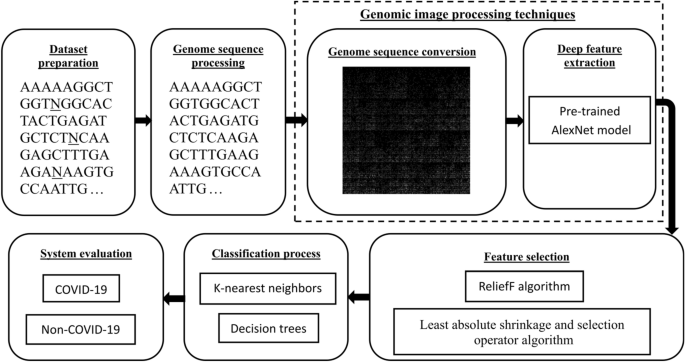
A hybrid deep learning approach for COVID-19 detection based on genomic image processing techniques
The coronavirus disease 2019 (COVID-19) pandemic has been spreading quickly, threatening the public health system. Consequently, positive COVID-19 cases must be rapidly detected and treated. Automatic detection systems are essential for controlling the COVID-19 pandemic. Molecular techniques and medical imaging scans are among the most effective approaches for detecting COVID-19. Although these approaches are crucial for controlling the COVID-19 pandemic, they have certain limitations. This study proposes an effective hybrid approach based on genomic image processing (GIP) techniques to
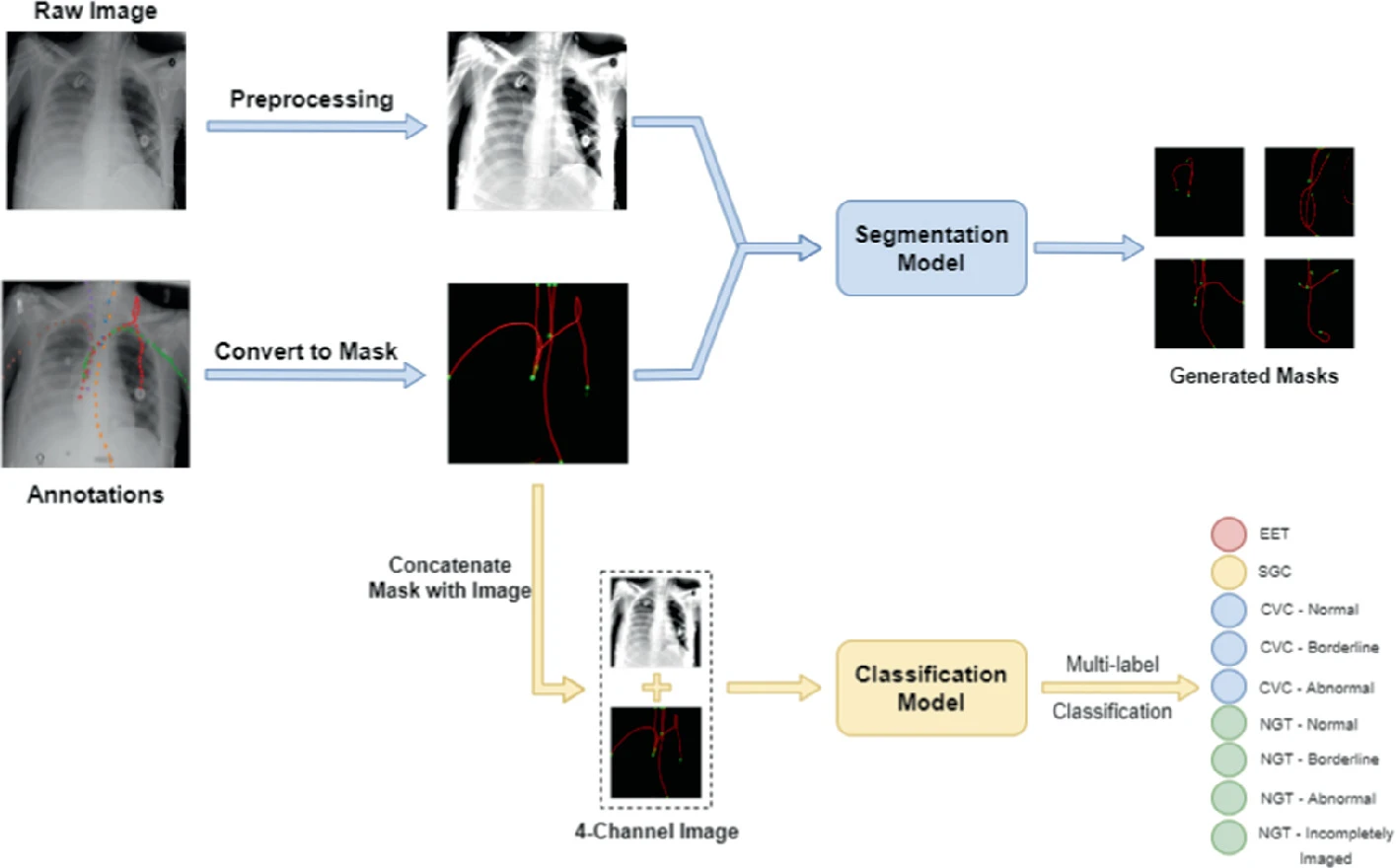
Efficient Pipeline for Rapid Detection of Catheters and Tubes in Chest Radiographs
Catheters are life support devices. Human expertise is often required for the analysis of X-rays in order to achieve the best positioning without misplacement complications. Many hospitals in underprivileged regions around the world lack the sufficient radiology expertise to frequently process X-rays for patients with catheters and tubes. This deficiency may lead to infections, thrombosis, and bleeding due to misplacement of catheters. In the last 2 decades, deep learning has provided solutions to various problems including medical imaging challenges. So instead of depending solely on
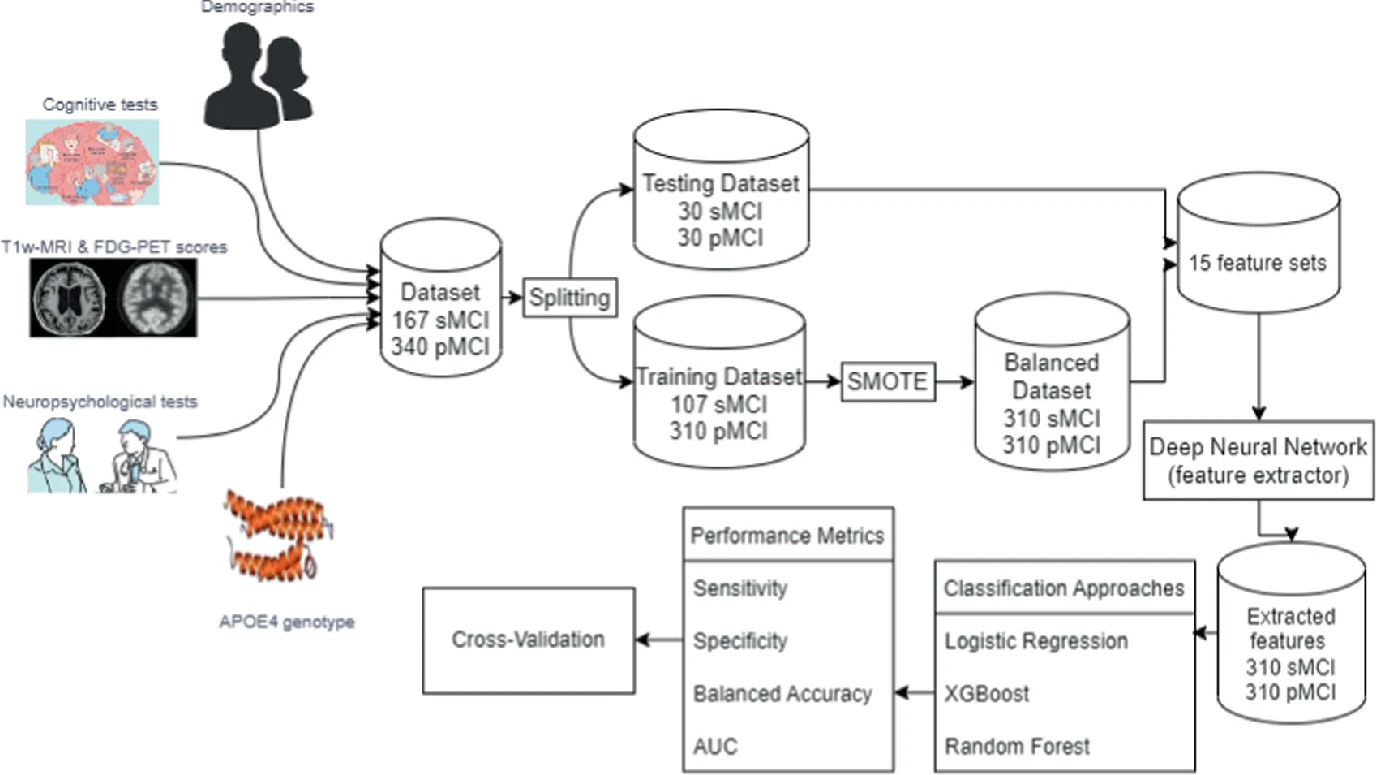
A Novel Diagnostic Model for Early Detection of Alzheimer’s Disease Based on Clinical and Neuroimaging Features
Alzheimer’s Disease (AD) is a dangerous disease that is known for its characteristics of eroding memory and destroying the brain. The classification of Alzheimer's disease is an important topic that has recently been addressed by many studies using Machine Learning (ML) and Deep Learning (DL) methods. Most research papers tackling early diagnosis of AD use these methods as a feature extractor for neuroimaging data. In our research paper, the proposed algorithm is to optimize the performance of the prediction of early diagnosis from the multimodal dataset by a multi-step framework that uses a
Differentiation Between Normal and Abnormal Functional Brain Connectivity Using Non-directed Model-Based Approach
Brain Connectivity refers to networks of functional and anatomical connections found throughout the brain. Multiple neural populations are connected by intricate connectivity circuits and interact with one another to exchange information, synchronize their activity, and participate in the accomplishment of complex cognitive tasks. Issues about how various brain regions contribute to cognition and their reciprocal roles have drawn the attention of researchers since the beginning of neuroscience. The interest in brain connection estimation has grown significantly due to the advancement of
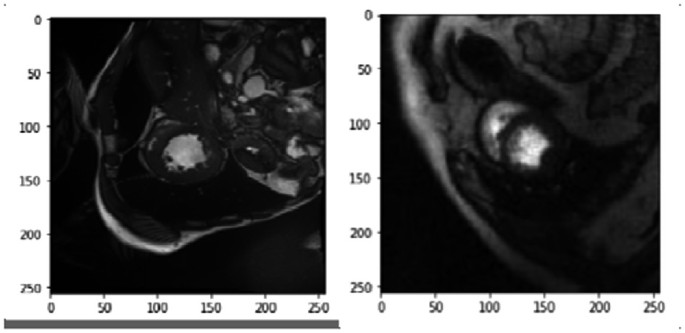
Transfer Learning in Segmenting Myocardium Perfusion Images
Cardiac magnetic resonance perfusion (CMRP) images are used to assess the local function and permeability of the heart muscle. The perfusion analysis requires the segmentation of cardiac inner and outer walls of the left ventricle (LV). However, the available perfusion datasets are limited or have no annotations. A fair dataset was annotated to employ the latest and most effective Deep Learning (DL) methodologies. In this paper, we employ similar cardiac imaging protocols in terms of cardiac geometry by initially training using CINE images and performing domain adaptation to CMRP images using
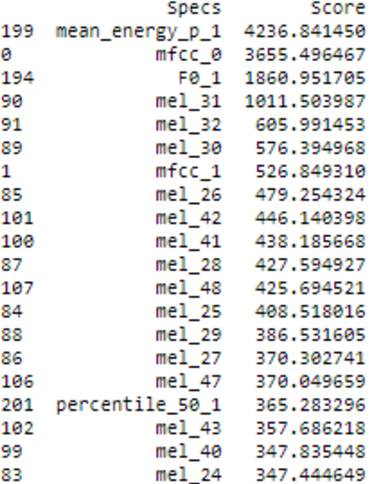
Arabic English Speech Emotion Recognition System
The Speech Emotion Recognition (SER) system is an approach to identify individuals' emotions. This is important for human-machine interface applications and for the emerging Metaverse. This work presents a bilingual Arabic-English speech emotion recognition system based on EYASE and RAVDESS datasets. A novel feature set was composed by using spectral and prosodic parameters to obtain high performance at a low computational cost. Different classification models were applied. These machine learning classifiers are Random Forest, Support Vector Machine, Logistic Regression, Multi-Layer Perceptron

Unravelling Diabetes-related Pathways Using 16S rRNA Microbiome Data from Human Gut and Nasal Cavity
Type 2 Diabetes (T2D) is a complex chronic illness that affects around 90% of diabetic patients worldwide. Prediabetes is an elementary phase for T2D that is recommended to be early diagnosed to prevent its progression. In this study, we used 16S rRNA data from the gut and nasal cavity of prediabetic and control patients to identify common and exclusive diabetic pathways for each body site. Furthermore, using the Phylogenetic Investigation of Communities by Reconstruction of Unobserved States (PICRUSt) as well as MicobiomeExplorer in the pathway enrichment analysis, we also identified the

From Gestures to Audio: A Dataset Building Approach for Egyptian Sign Language Translation to Arabic Speech
The communication barriers faced by people with disabilities, particularly the deaf or hard of hearing, nonverbal, deaf-mute, and blind have a significant impact on their quality of life and social inclusion. Our research aims to provide real-time translation from sign language to speech and vice versa. The ability to provide real-time speech-to-text and text-to-sign language translation will help alleviate these barriers, improve communication, and increase social inclusivity for this community ensuring they are not left out in conversations and social interactions. A significant amount of
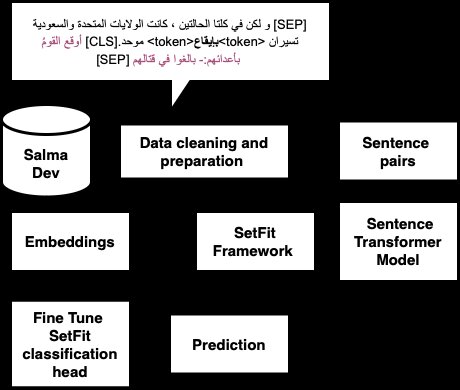
Pirates at ArabicNLU2024: Enhancing Arabic Word Sense Disambiguation using Transformer-Based Approaches
This paper presents a novel approach to Arabic Word Sense Disambiguation (WSD) leveraging transformer-based models to tackle the complexities of the Arabic language. Utilizing the SALMA dataset, we applied several techniques, including Sentence Transformers with Siamese networks and the SetFit framework optimized for few-shot learning. Our experiments, structured around a robust evaluation framework, achieved a promising F1-score of up to 71%, securing second place in the ArabicNLU 2024: The First Arabic Natural Language Understanding Shared Task competition. These results demonstrate the
Genomic image representation of human coronavirus sequences for COVID-19 detection
Coronavirus (CoV) disease 2019 (COVID-19) is a severe pandemic affecting millions worldwide. Due to its rapid evolution, researchers have been working on developing diagnostic approaches to suppress its spread. This study presents an effective automated approach based on genomic image processing (GIP) techniques to rapidly detect COVID-19, among other human CoV diseases, with high acceptable accuracy. The GIP technique was applied as follows: first, genomic graphical mapping techniques were used to convert the genome sequences into genomic grayscale images. The frequency chaos game