
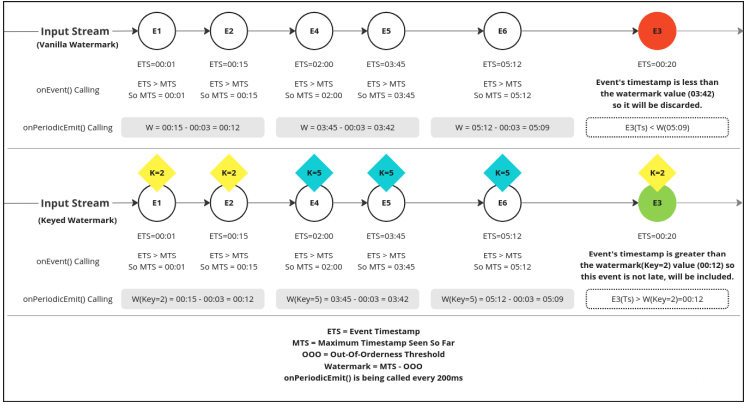
Keyed Watermarks: A Fine-grained Tracking of Event-time in Apache Flink
Big Data Stream processing engines such as Apache Flink use windowing techniques to handle unbounded streams of events. Gathering all pertinent input within a window is crucial for event-time windowing since it affects how accurate results are. A significant part of this process is played by watermarks, which are unique timestamps that show the passage of events in time. However, the current watermark generation method in Apache Flink, which works at the level of the input stream, tends to favor faster sub-streams, resulting in dropped events from slower sub-streams. In our analysis, we found
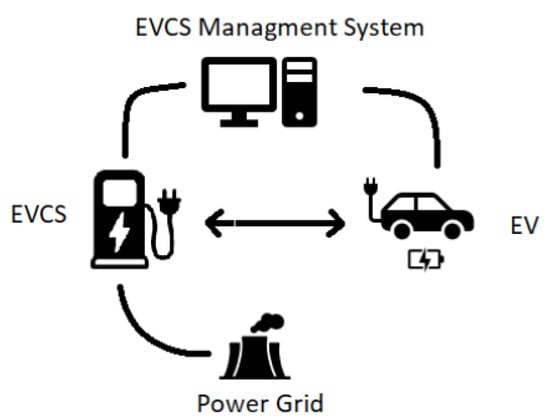
A Machine Learning-Based Intrusion Detection System for IoT Electric Vehicle Charging Stations (EVCSs)
The demand for electric vehicles (EVs) is growing rapidly. This requires an ecosystem that meets the user’s needs while preserving security. The rich data obtained from electric vehicle stations are powered by the Internet of Things (IoT) ecosystem. This is achieved through us of electric vehicle charging station management systems (EVCSMSs). However, the risks associated with cyber-attacks on IoT systems are also increasing at the same pace. To help in finding malicious traffic, intrusion detection systems (IDSs) play a vital role in traditional IT systems. This paper proposes a classifier
Dual-Level Sensor Selection with Adaptive Sensor Recovery to Extend WSNs’ Lifetime
Wireless sensor networks (WSNs) have garnered much attention in the last decades. Nowadays, the network contains sensors that have been expanded into a more extensive network than the internet. Cost is one of the issues of WSNs, and this cost may be in the form of bandwidth, computational cost, deployment cost, or sensors’ battery (sensor life). This paper proposes a dual-level sensor selection (DLSS) model used to reduce the number of sensors forming WSNs. The sensor reduction process is performed at two consecutive levels. First, a combination of the Fisher score method and ANOVA test at the
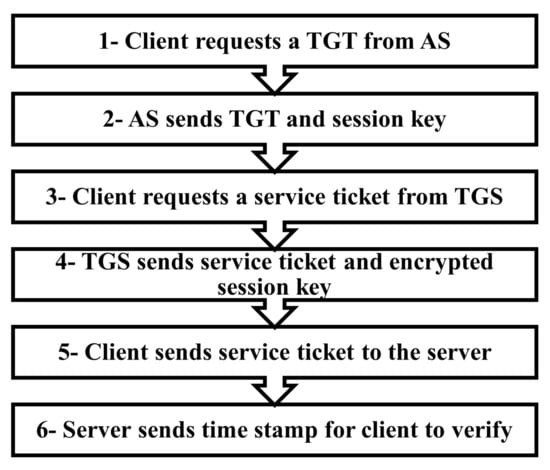
Active Directory Attacks—Steps, Types, and Signatures
Active Directory Domain is a Microsoft service that allows and facilitates the centralized administration of all workstations and servers in any environment. Due to the wide use and adoption of this service, it has become a target for many attackers. Active Directory attacks have evolved through years. The attacks target different functions and features provided by Active Directory. In this paper, we provide insights on the criticality, impact, and detection of Active Directory attacks. We review the different Active Directory attacks. We introduce the steps of the Active Directory attack and
Hybrid Global Optimization Algorithm for Feature Selection
This paper proposes Parallelized Linear Time-Variant Acceleration Coefficients and Inertial Weight of Particle Swarm Optimization algorithm (PLTVACIW-PSO). Its designed has introduced the benefits of Parallel computing into the combined power of TVAC (Time-Variant Acceleration Coefficients) and IW (Inertial Weight). Proposed algorithm has been tested against linear, non-linear, traditional, and multiswarm based optimization algorithms. An experimental study is performed in two stages to assess the proposed PLTVACIW-PSO. Phase I uses 12 recognized Standard Benchmarks methods to evaluate the

ArFakeDetect: A Deep Learning Approach for Detecting Fabricated Arabic Tweets on COVID-19 Vaccines
Social media platforms have emerged as major sources of false information, particularly regarding health topics. like COVID-19 vaccines. This rampant dissemination of inaccurate content contributes significantly to vaccine hesitancy and undermines vaccination campaigns. This research addresses the pressing need for automated methods to distinguish between factual and fabricated Arabic tweets concerning vaccines, aiming to mitigate the spread of misinformation on these platforms. The proposed approach utilizes deep learning techniques, leveraging pre-trained Arabic language models (Arabert)
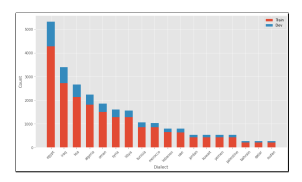
On The Arabic Dialects' Identification: Overcoming Challenges of Geographical Similarities Between Arabic dialects and Imbalanced Datasets
Arabic is one of the world's richest languages, with a diverse range of dialects based on geographical origin. In this paper, we present a solution to tackle subtask 1 (Country-level dialect identification) of the Nuanced Arabic Dialect Identification (NADI) shared task 2022 achieving third place with an average macro F1 score between the two test sets of 26.44%. In the preprocessing stage, we removed the most common frequent terms from all sentences across all dialects, and in the modeling step, we employed a hybrid loss function approach that includes Weighted cross entropy loss and Vector
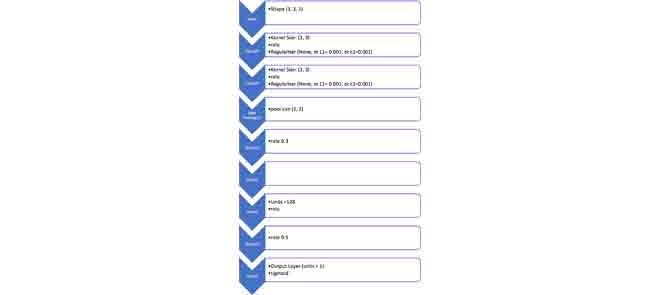
Anomaly Detection Based on CNN and Regularization Techniques Against Zero-Day Attacks in IoT Networks
The fast expansion of the Internet of Things (IoT) in the technology and communication industries necessitates a continuously updated cyber-security mechanism to keep protecting the systems' users from any possible attack that might target their data and privacy. Botnets pose a severe risk to the IoT, they use malicious nodes in order to compromise other nodes inside the network to launch several types of attacks causing service disruption. Examples of these attacks are Denial of Service (DoS), Distributed Denial of Service (DDoS), Service Scan, and OS Fingerprint. DoS and DDoS attacks are the
In-Silico targeting of SARS-CoV-2 NSP6 for drug and natural products repurposing
Non-Structural Protein 6 (NSP6) has a protecting role for SARS-CoV-2 replication by inhibiting the expansion of autophagosomes inside the cell. NSP6 is involved in the endoplasmic reticulum stress response by binding to Sigma receptor 1 (SR1). Nevertheless, NSP6 crystal structure is not solved yet. Therefore, NSP6 is considered a challenging target in Structure-Based Drug Discovery. Herein, we utilized the high quality NSP6 model built by AlphaFold in our study. Targeting a putative NSP6 binding site is believed to inhibit the SR1-NSP6 protein-protein interactions. Three databases were
Towards Arabic Image Captioning: A Transformer-Based Approach
The automatic generation of textual descriptions from images, known as image captioning, holds significant importance in various applications. Image captioning applications include accessibility for the visually impaired, social media enhancement, automatic image description for search engines, assistive technology for education, and many more. While extensive research has been conducted in English, exploring this challenge in Arabic remains limited due to its complexity. Arabic is one of the world's most widely spoken languages. Around 420 million native people speak this language. It is also