
Stem cell for PD: Technical considerations
The emergence of very sophisticated stem therapy or regenerative medicine can be attributed to the identification and extraction of pluripotent ESCs. This breakthrough resolved the ethical dilemma linked to embryonic stem cells and facilitated the initiation of clinical trials and subsequent rapid progress in the subsequent years. This chapter explores the prospect of stem cell therapy as a treatment for Parkinson's disease (PD), a degenerative neurological condition. The text commences by providing an overview of stem cells, clarifying their distinct regenerative characteristics and their
Hybrid Global Optimization Algorithm for Feature Selection
This paper proposes Parallelized Linear Time-Variant Acceleration Coefficients and Inertial Weight of Particle Swarm Optimization algorithm (PLTVACIW-PSO). Its designed has introduced the benefits of Parallel computing into the combined power of TVAC (Time-Variant Acceleration Coefficients) and IW (Inertial Weight). Proposed algorithm has been tested against linear, non-linear, traditional, and multiswarm based optimization algorithms. An experimental study is performed in two stages to assess the proposed PLTVACIW-PSO. Phase I uses 12 recognized Standard Benchmarks methods to evaluate the
Smart Prediction of Circulatory Failure: Machine Learning for Early Detection of Patient Deterioration
Circulatory failure, also known as shock, is a critical condition that can have serious consequences for one's health. Early detection and timely intervention are crucial for improving patient outcomes. Machine learning (ML) models have shown promise in predicting circulatory failure based on clinical data. In our study, we examined different machine learning (ML) models to predict circulatory failure in patients who were admitted to the intensive care unit (ICU) with suspected circulatory problems. The ML model we developed used various algorithms like random forest, LG, XGB, Decision Tree
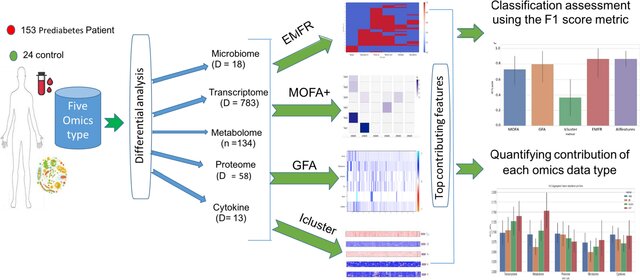
Comparative evaluation of multiomics integration tools for the study of prediabetes: insights into the earliest stages of type 2 diabetes mellitus
Type 2 diabetes mellitus (T2D) remains a critical health concern, particularly in its early disease stages such as prediabetes. Understanding these early stages is paramount for improving patient outcomes. Multiomics data integration tools offer promise in unraveling the underlying mechanisms of T2D. The advent of high-throughput technology and the increasing availability of multiomics data has led to the development of several statistical and network-based integration methods. However, the performance of such methods varies, requiring their output evaluation in an unbiased manner. Here, we
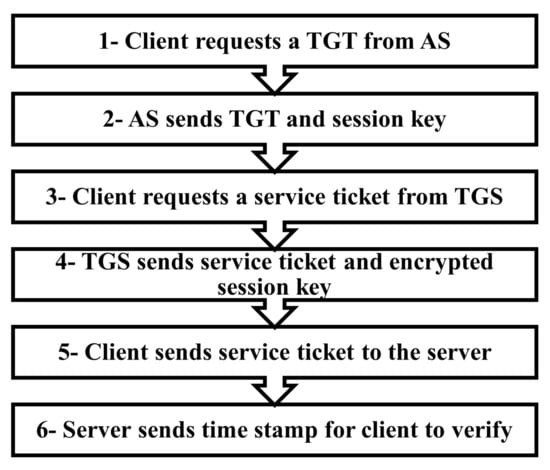
Active Directory Attacks—Steps, Types, and Signatures
Active Directory Domain is a Microsoft service that allows and facilitates the centralized administration of all workstations and servers in any environment. Due to the wide use and adoption of this service, it has become a target for many attackers. Active Directory attacks have evolved through years. The attacks target different functions and features provided by Active Directory. In this paper, we provide insights on the criticality, impact, and detection of Active Directory attacks. We review the different Active Directory attacks. We introduce the steps of the Active Directory attack and

Rough Sets Hybridization with Mayfly Optimization for Dimensionality Reduction
Big data is a vast amount of structured and unstructured data that must be dealt with on a regular basis. Dimensionality reduction is the process of converting a huge set of data into data with tiny dimensions so that equal information may be expressed easily. These tactics are frequently utilized to improve classification or regression challenges while dealing with machine learning issues. To achieve dimensionality reduction for huge data sets, this paper offers a hybrid particle swarm optimization-rough set PSO-RS and Mayfly algorithm-rough set MA-RS. A novel hybrid strategy based on the
Dual-Level Sensor Selection with Adaptive Sensor Recovery to Extend WSNs’ Lifetime
Wireless sensor networks (WSNs) have garnered much attention in the last decades. Nowadays, the network contains sensors that have been expanded into a more extensive network than the internet. Cost is one of the issues of WSNs, and this cost may be in the form of bandwidth, computational cost, deployment cost, or sensors’ battery (sensor life). This paper proposes a dual-level sensor selection (DLSS) model used to reduce the number of sensors forming WSNs. The sensor reduction process is performed at two consecutive levels. First, a combination of the Fisher score method and ANOVA test at the
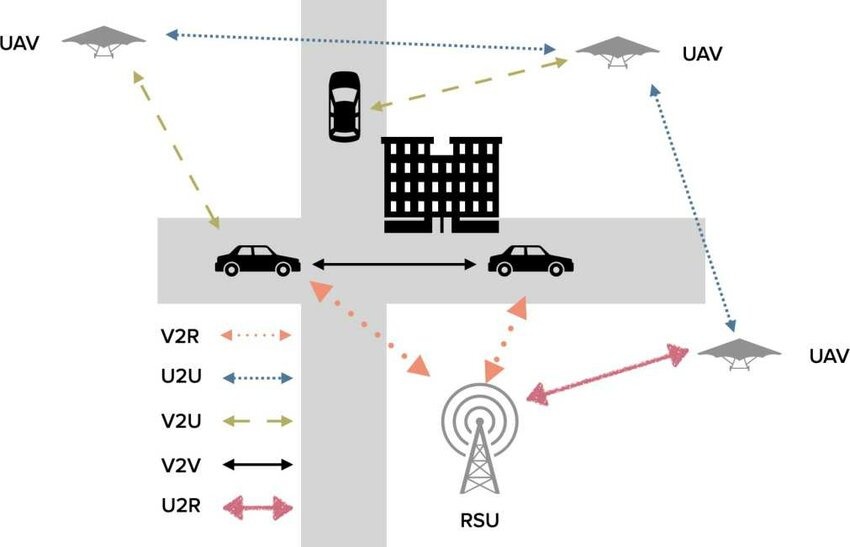
Intrusion Detection in VANETs and ACVs using Deep Learning
There are many novel techniques for intrusion detection in vehicular ad hoc networks and autonomous and connected vehicles. Detecting and reporting an attack is the main responsibility of an Intrusion detection system (IDS). Deep learning is used to make IDS smarter and more accurate. It implies other challenges on the other hand. This paper covers the proposed IDS based deep learning solutions and comparing effectiveness and efficiency of those solutions. © 2022 IEEE.
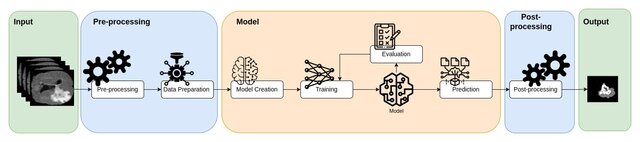
Brain Tumor Semantic Segmentation using Residual U-Net++ Encoder-Decoder Architecture
Image segmentation is considered one of the essen-tial tasks for extracting useful information from an image. Given the brain tumor and its consumption of medical resources, the development of a deep learning method for MRI to segment the brain tumor of patients’ MRI is illustrated here. Brain tumor segmentation technique is crucial in detecting and treating MRI brain tumors. Furthermore, it assists physicians in locating and measuring tumors and developing treatment and rehabilitation programs. The residual U-Net++ encoder-decoder-based architec-ture is designed as the primary network, and it

Introduction to genomics-based pharmaceutical applications
Biomedical research and pharmaceutical development have been profoundly impacted by genomics in recent years, with researchers gaining new understanding of the genetic pathways underlying disease and opening up new opportunities for the creation of targeted therapeutic interventions. Without a comprehensive grasp of the genetic mechanisms at play, medication discovery approaches in the past often relied on trial and error, targeting particular symptoms or pathways. However, the advent of genomics has changed the game. Scientific advances in high-throughput DNA sequencing have allowed