
Filter by
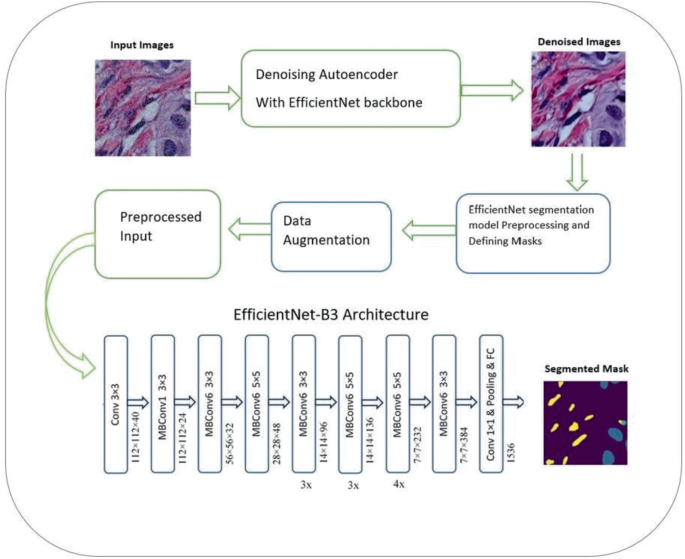
Revolutionizing Cancer Diagnosis Through Hybrid Self-supervised Deep Learning: EfficientNet with Denoising Autoencoder for Semantic Segmentation of Histopathological Images
Machine Learning technologies are being developed day after day, especially in the medical field. New approaches, algorithms and architectures are implemented to increase the efficiency and accuracy of diagnosis and segmentation. Deep learning approaches have proven their efficiency; these approaches include architectures like EfficientNet and Denoising Autoencoder. Accurate segmentation of nuclei
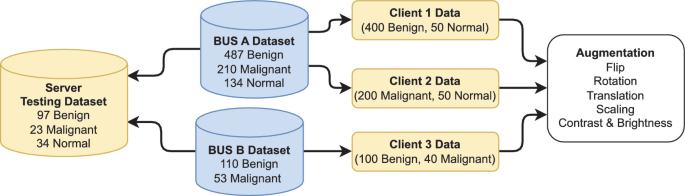
A Novel Approach to Breast Cancer Segmentation Using U-Net Model with Attention Mechanisms and FedProx
Breast cancer is a leading cause of death among women worldwide, emphasizing the need for early detection and accurate diagnosis. As such Ultrasound Imaging, a reliable and cost-effective tool, is used for this purpose, however the sensitive nature of medical data makes it challenging to develop accurate and private artificial intelligence models. A solution is Federated Learning as it is a
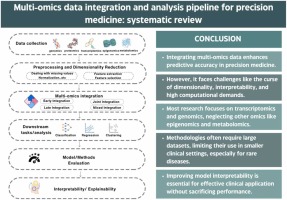
Multi-omics data integration and analysis pipeline for precision medicine: Systematic review
Precision medicine has gained considerable popularity since the “one-size-fits-all” approach did not seem very effective or reflective of the complexity of the human body. Subsequently, since single-omics does not reflect the complexity of the human body's inner workings, it did not result in the expected advancement in the medical field. Therefore, the multi-omics approach has emerged. The multi
Synthetic to Real Human Avatar Translation via One Shot Pretrained GAN Inversion
This paper tackles the problem of generating pho-torealstic images of synthetically rendered human avatar faces from computer graphics engines, our approach leverages the high capabilities of generative models as StyleGAN that can generate high quality human faces that are hard to distinguish from real human faces images. We present a framework that effectively bridges the gap between synthetic
T5-LDSum: Leveraging T5 Transformer in Hybrid Abstractive-Extractive Long Document Summarization
In the era of digital information overload, the ability to summarize books efficiently emerges as an invaluable skill. Book summarization condenses extensive texts into digestible, concise summaries, enabling readers to grasp the essence of a book without committing to reading it in its entirety. In scholarly research, various techniques for text summarization are employed, including extractive
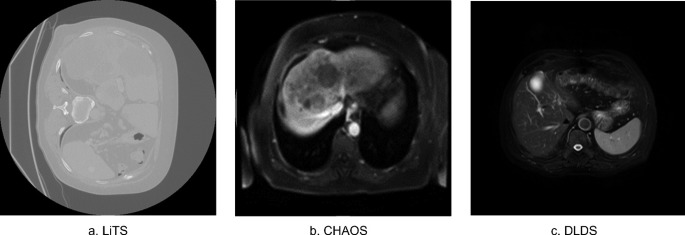
Cross-Modality Deep Transfer Learning: Application to Liver Segmentation in CT and MRI
Liver diseases cause up to two million deaths yearly. Their diagnosis and treatment plans require an accurate assessment of the liver structure and tissue characteristics. Imaging modalities such as computed tomography (CT) and Magnetic resonance (MR) can be used to assess the liver. CT has better spatial resolution compared to MR, which has better tissue contrast. Each modality has its own
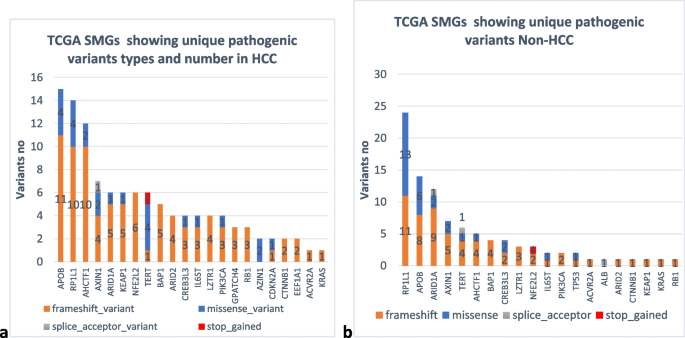
Correction to: Genomic landscape of hepatocellular carcinoma in Egyptian patients by whole exome sequencing (BMC Medical Genomics, (2024), 17, 1, (202), 10.1186/s12920-024-01965-w)
Tables 2, 3, and 6, as shown in the original publication, were modified to black and white during the typesetting process. Following the publication, the authors requested that the tables be reverted to their original-colored versions, as the colors in the heatmap indicate the number of pathogenic variants present in genes. Green indicates the smallest number, and red indicates the highest number
A Comparative Analysis of Large Language Models for Automated Course Content Generation from Books
Large Language Models (LLMs) have emerged as powerful tools for extracting course topics from textbooks in today's fast-paced educational landscape. Additionally, harnessing the potential of Knowledge Graphs to visualize the mutuality among topics enhances the informativeness of the extracted content. This paper presents a comprehensive comparative study that explores and assesses the
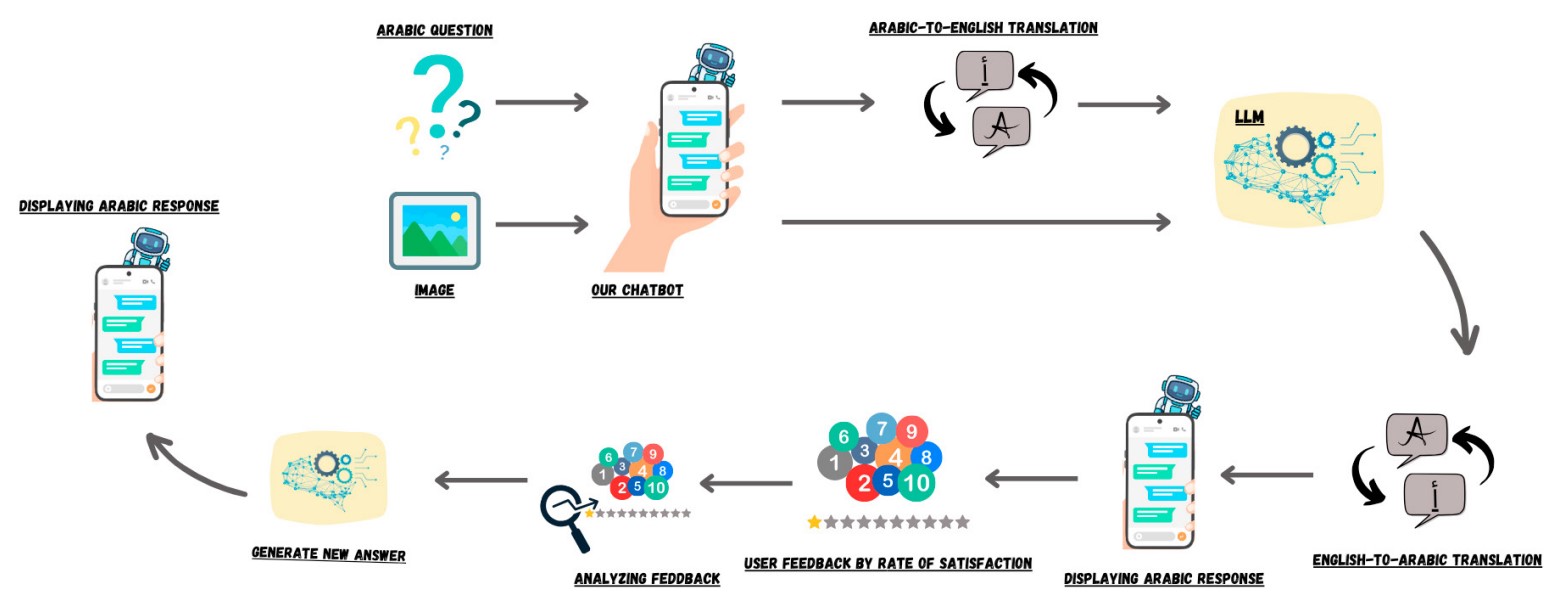
Enhancing Visual Question Answering for Arabic Language Using LLaVa and Reinforcement Learning
Visual Question Answering (VQA) systems have achieved remarkable advancements by combining text-based question answering with image analysis. This integration has resulted in the creating of machines that can comprehend and address questions related to visual content. Despite these technological developments, a notable lack of VQA solutions specifically designed for the Arabic language remains
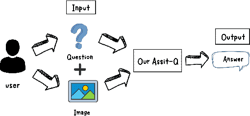
ArabicQuest: Enhancing Arabic Visual Question Answering with LLM Fine-Tuning
In an attempt to bridge the semantic gap between language understanding and visuals, Visual Question Answering (VQA) offers a challenging intersection of computer vision and natural language processing. Large Language Models (LLMs) have shown remarkable ability in natural language understanding; however, their use in VQA, particularly for Arabic, is still largely unexplored. This study aims to