
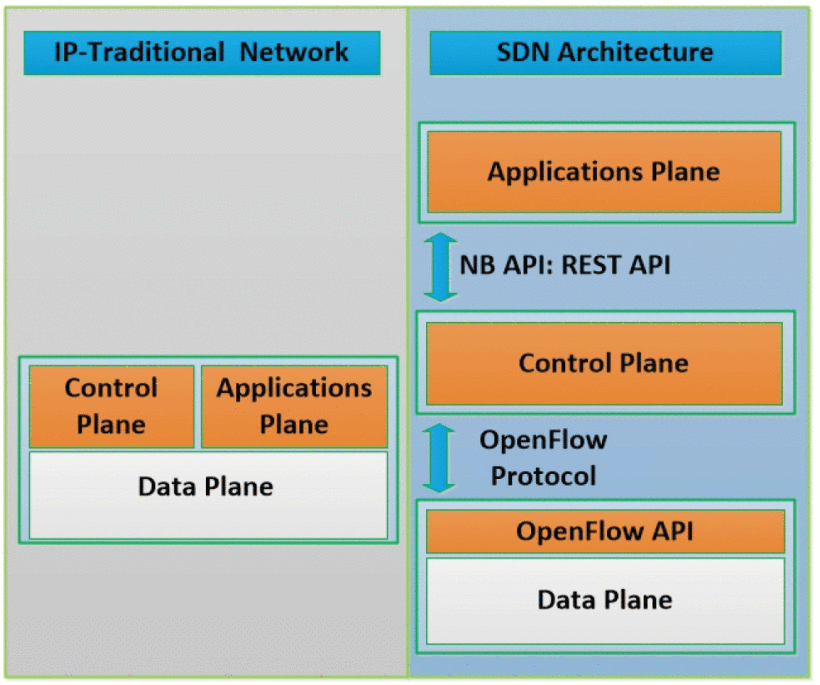
A Flow-Based Anomaly Detection Approach With Feature Selection Method Against DDoS Attacks in SDNs
Software Defined Networking (SDN) is an emerging network platform, which facilitates centralised network management. The SDN enables the network operators to manage the overall network consistently and holistically, regardless the complexity of infrastructure devices. The promising features of the SDN enhance network security and facilitate the implementation of threat detection systems through software applications using open APIs. However, the emerging technology creates new security concerns and new threats that do not exist in the current traditional networks. Distributed Denial of Service
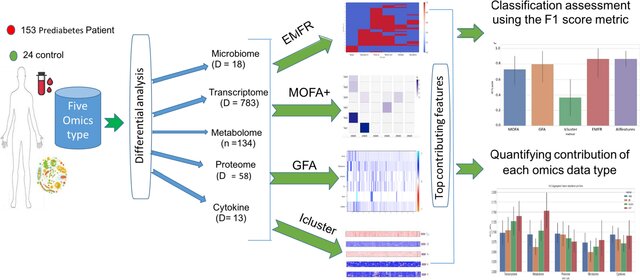
Comparative evaluation of multiomics integration tools for the study of prediabetes: insights into the earliest stages of type 2 diabetes mellitus
Type 2 diabetes mellitus (T2D) remains a critical health concern, particularly in its early disease stages such as prediabetes. Understanding these early stages is paramount for improving patient outcomes. Multiomics data integration tools offer promise in unraveling the underlying mechanisms of T2D. The advent of high-throughput technology and the increasing availability of multiomics data has led to the development of several statistical and network-based integration methods. However, the performance of such methods varies, requiring their output evaluation in an unbiased manner. Here, we
Hybrid Global Optimization Algorithm for Feature Selection
This paper proposes Parallelized Linear Time-Variant Acceleration Coefficients and Inertial Weight of Particle Swarm Optimization algorithm (PLTVACIW-PSO). Its designed has introduced the benefits of Parallel computing into the combined power of TVAC (Time-Variant Acceleration Coefficients) and IW (Inertial Weight). Proposed algorithm has been tested against linear, non-linear, traditional, and multiswarm based optimization algorithms. An experimental study is performed in two stages to assess the proposed PLTVACIW-PSO. Phase I uses 12 recognized Standard Benchmarks methods to evaluate the

Malware Detection Techniques
Computers and systems are vulnerable to many threats. Security researchers identified the malware as the major computers and systems threat. Malware can be classified into different types depending on the infection, attacking target, and persistence technique. In this paper, Malware detection techniques are observed with the identification of each technique's strengths and weaknesses points, followed by a comparison between all malware detection techniques. © 2022 IEEE.
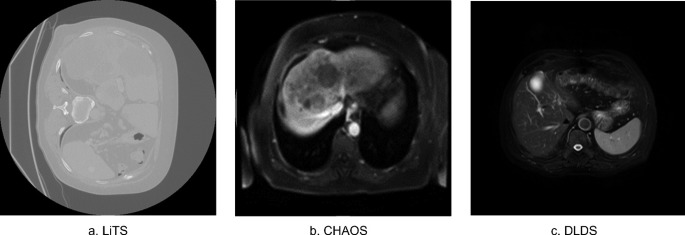
Cross-Modality Deep Transfer Learning: Application to Liver Segmentation in CT and MRI
Liver diseases cause up to two million deaths yearly. Their diagnosis and treatment plans require an accurate assessment of the liver structure and tissue characteristics. Imaging modalities such as computed tomography (CT) and Magnetic resonance (MR) can be used to assess the liver. CT has better spatial resolution compared to MR, which has better tissue contrast. Each modality has its own applications. However, CT is widely used due its ease of access, lower cost and a shorter examination time. Liver segmentation is an important step that helps to accurately identify and isolate the liver

ArFakeDetect: A Deep Learning Approach for Detecting Fabricated Arabic Tweets on COVID-19 Vaccines
Social media platforms have emerged as major sources of false information, particularly regarding health topics. like COVID-19 vaccines. This rampant dissemination of inaccurate content contributes significantly to vaccine hesitancy and undermines vaccination campaigns. This research addresses the pressing need for automated methods to distinguish between factual and fabricated Arabic tweets concerning vaccines, aiming to mitigate the spread of misinformation on these platforms. The proposed approach utilizes deep learning techniques, leveraging pre-trained Arabic language models (Arabert)
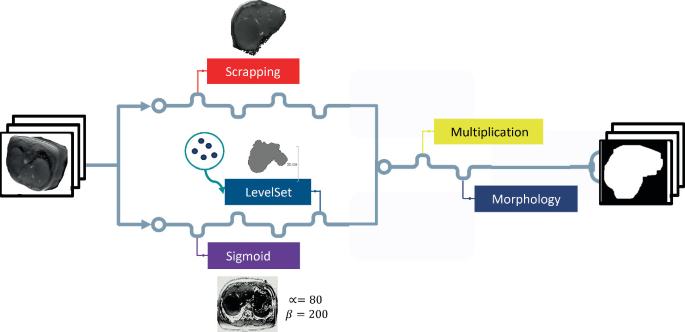
Iterative Refinement Algorithm for Liver Segmentation Ground-Truth Generation Using Fine-Tuning Weak Labels for CT and Structural MRI
Medical image segmentation is indicated in a number of treatments and procedures, such as detecting pathological changes and organ resection. However, it is a time-consuming process when done manually. Automatic segmentation algorithms like deep learning methods overcome this hurdle, but they are data-hungry and require expert ground-truth annotations, which is a limitation, particularly in medical datasets. On the other hand, unannotated medical datasets are easier to come by and can be used in several methods to learn ground-truth masks. In this paper, we aim to utilize across-modalities
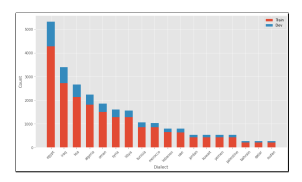
On The Arabic Dialects' Identification: Overcoming Challenges of Geographical Similarities Between Arabic dialects and Imbalanced Datasets
Arabic is one of the world's richest languages, with a diverse range of dialects based on geographical origin. In this paper, we present a solution to tackle subtask 1 (Country-level dialect identification) of the Nuanced Arabic Dialect Identification (NADI) shared task 2022 achieving third place with an average macro F1 score between the two test sets of 26.44%. In the preprocessing stage, we removed the most common frequent terms from all sentences across all dialects, and in the modeling step, we employed a hybrid loss function approach that includes Weighted cross entropy loss and Vector
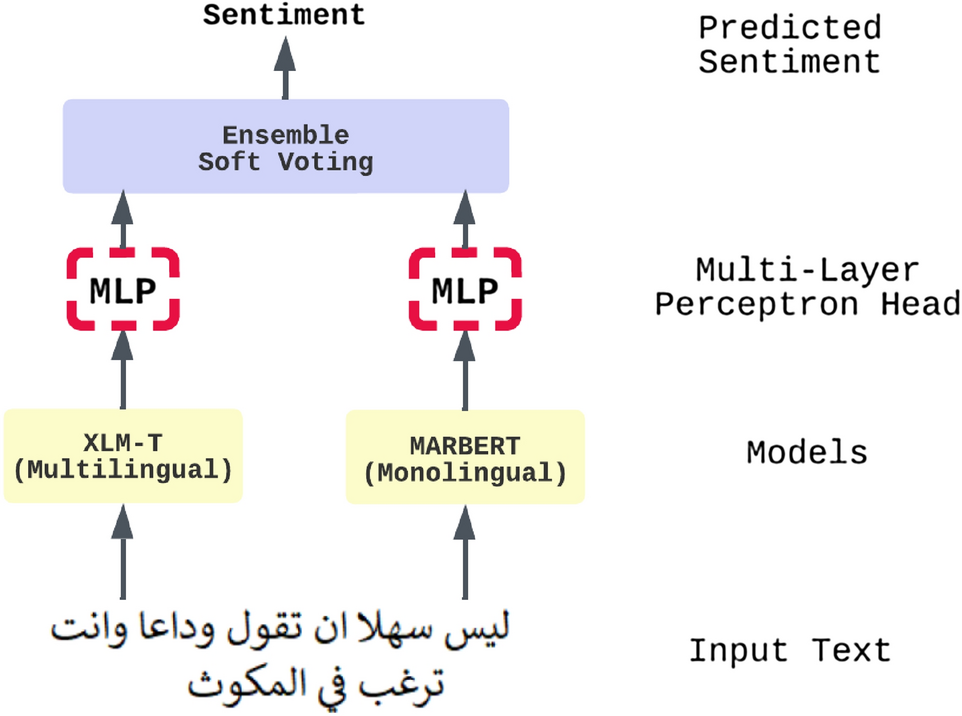
An ensemble transformer-based model for Arabic sentiment analysis
Sentiment analysis is a common and challenging task in natural language processing (NLP). It is a widely studied area of research; it facilitates capturing public opinions about a topic, product, or service. There is much research that tackles English sentiment analysis. However, the research in the Arabic language is behind other high-resource languages. Recently, models such as bidirectional encoder representations from transformers (BERT) and generative pre-trained transformer (GPT) have been widely used in many NLP tasks; it significantly improved performance in NLP tasks, especially
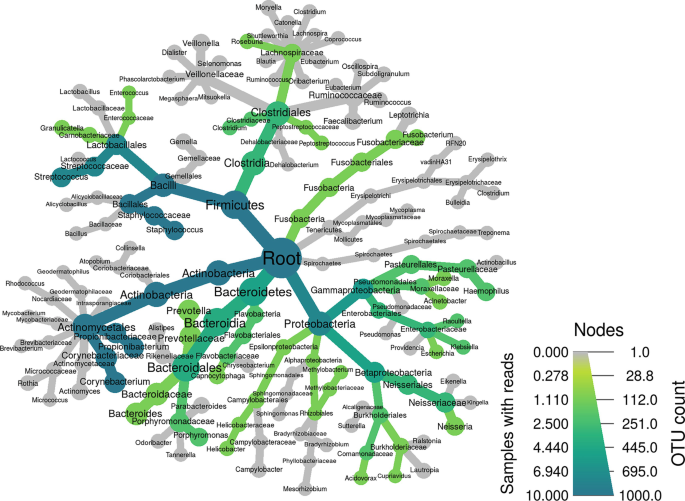
Comprehensive Guideline for Microbiome Analysis Using R
The need for a comprehensive consolidated guide for R packages and tools that are used in microbiome data analysis is significant; thus, we aim to provide a detailed step-by-step dissection of the most used R packages and tools in the field of microbiome data integration and analysis. The guideline aims to be a user-friendly simplification and tutorial on five main packages, namely phyloseq, MegaR, DADA2, Metacoder, and microbiomeExplorer due to their high efficiency and benefit in microbiome data analysis. © 2023, The Author(s), under exclusive license to Springer Science+Business Media, LLC