

Multimodal Video Sentiment Analysis Using Deep Learning Approaches, a Survey
Deep learning has emerged as a powerful machine learning technique to employ in multimodal sentiment analysis tasks. In the recent years, many deep learning models and various algorithms have been proposed in the field of multimodal sentiment analysis which urges the need to have survey papers that summarize the recent research trends and directions. This survey paper tackles a comprehensive overview of the latest updates in this field. We present a sophisticated categorization of thirty-five state-of-the-art models, which have recently been proposed in video sentiment analysis field, into
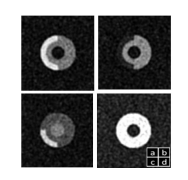
Automated cardiac-tissue identification in composite strain-encoded (C-SECN) images using fuzzy K-means and bayesian classifier
Composite Strain Encoding (C-SENC) is an MRI acquisition technique for simultaneous acquisition of cardiac tissue viability and contractility images. It combines the use of black-blood delayed-enhancement imaging to identify the infracted (dead) tissue inside the heart wall muscle and the ability to image myocardial deformation (MI) from the strain-encoding (SENC) imaging technique. In this work, we propose an automatic image processing technique to identify the different heart tissues. This provides physicians with a better clinical decision-making tool in patients with myocardial infarction
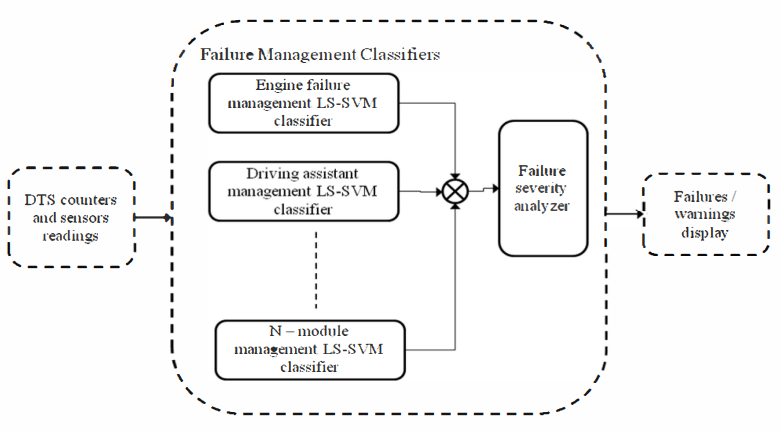
Remote prognosis, diagnosis and maintenance for automotive architecture based on least squares support vector machine and multiple classifiers
Software issues related to automotive controls account for an increasingly large percentage of the overall vehicles recalled. To alleviate this problem, vehicle diagnosis and maintenance systems are increasingly being performed remotely, that is while the vehicle is being driven without need for factory recall and there is strong consumer interest in Remote Diagnosis and Maintenance (RD&M) systems. Such systems are developed with different building blocks/elements and various capabilities. This paper presents a novel automotive RD&M system and prognosis architecture. The elements of the
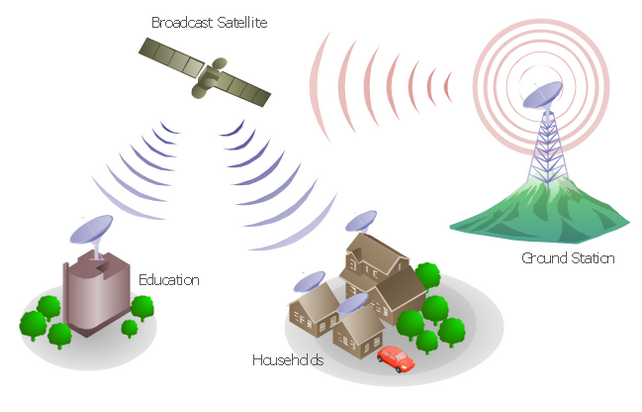
ITS navigation and live timetables for the blind based on RFID robotic localization algorithms and ZigBee broadcasting
This paper tries to alleviate some challenges facing blind and visually impaired people in public transportation systems by providing them with in-station navigation information and real-time schedule information. Novel system architecture for the Intelligent Transportation Systems (ITS) navigation for blind and visually impaired people based on recent Radio Frequency Identification (RFID) localization technologies, commonly used in robotics, is proposed. Furthermore, a live timetable using a new ZigBee network broadcasting protocol with detailed frame structure is used for provision of real
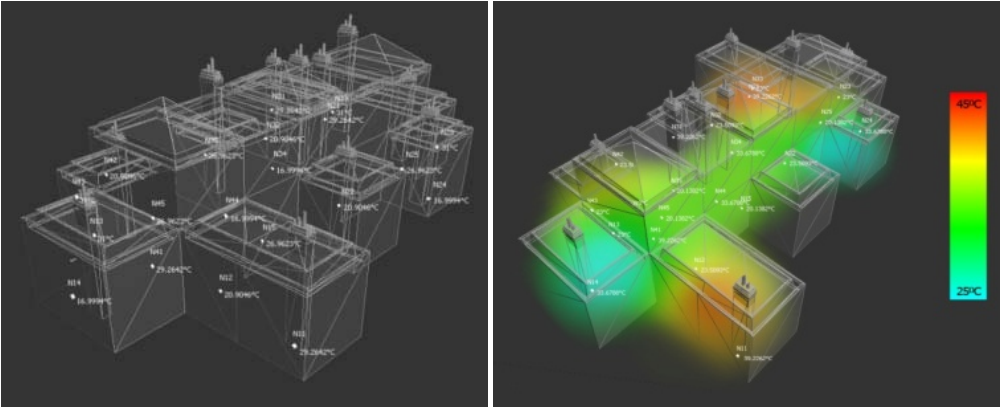
Monitoring and visualization of large WSN deployments
Recent developments in wireless sensor networks have ushered in novel ubiquitous computing applications based on distributed large-scale data acquisition and interactive interpretation. However, current WSNs suffer from lack of effective tools to support large network deployment and administration as well as unavailability of interactive visualization techniques required to explore and analyze captured sensing data, which is hindering the development of real-life WSN-based ubiquitous systems. Sensor Explorer addresses the above problems by providing modular efficient stream management engine
News auto-tagging using Wikipedia
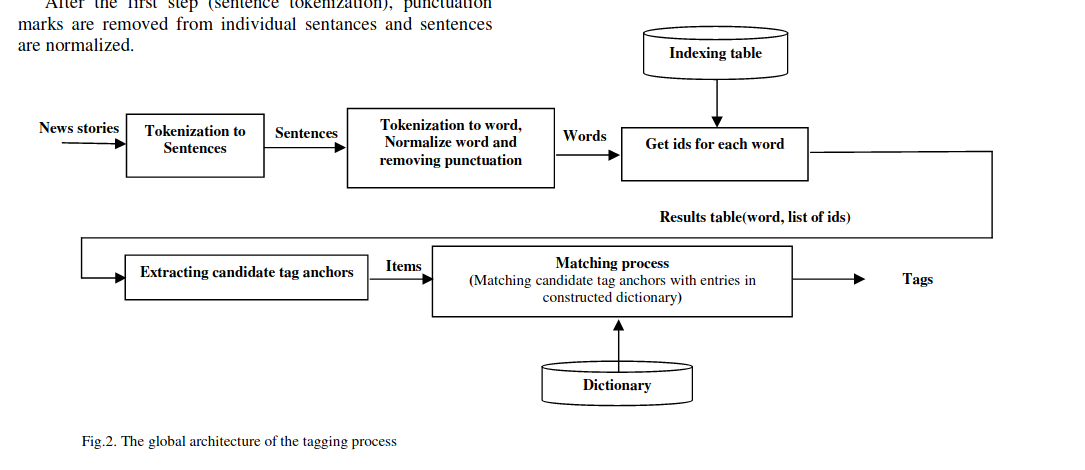
This paper presents an efficient method for automatically annotating Arabic news stories with tags using Wikipedia. The idea of the system is to use Wikipedia article names, properties, and re-directs to build a pool of meaningful tags. Sophisticated and efficient matching methods are then used to detect text fragments in input news stories that correspond to entries in the constructed tag pool. Generated tags represent real life entities or concepts such as the names of popular places, known organizations, celebrities, etc. These tags can be used indirectly by a news site for indexing
Computing the Burrows-Wheeler transform of a string and its reverse in parallel
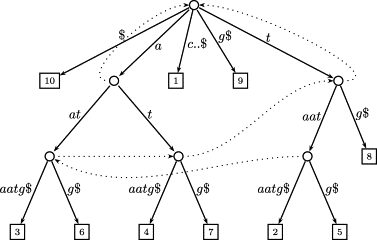
The contribution of this article is twofold. First, we provide new theoretical insights into the relationship between a string and its reverse: If the Burrows-Wheeler transform (BWT) of a string has been computed by sorting its suffixes, then the BWT, the suffix array, and the longest common prefix array of the reverse string can be derived from it without suffix sorting. Furthermore, we show that the longest common prefix arrays of a string and its reverse are permutations of each other. Second, we provide a parallel algorithm that, given the BWT of a string, computes the BWT of its reverse
A system for assessing the quality of Web pages
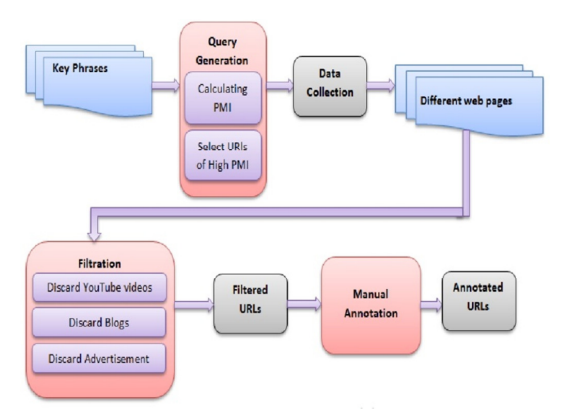
The World Wide Web has brought about an unprecedented explosion in the amount of information available on-line, largely in the form of Web pages. The fact that anyone can publish anything has ultimately led to pages with varying degrees of quality. This paper aims at investigating means for assessing the quality of a random web page and provides a quantitative approach for selecting high quality-content pages. The work was motivated by the need to locate pages that may be considered as candidates for translation. © 2013 IEEE.
Cloud-based parallel suffix array construction based on MPI
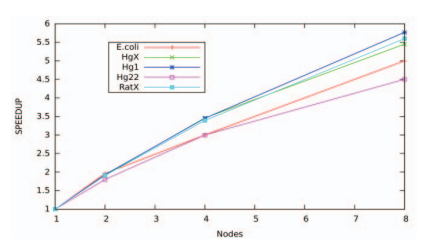
Massive amount of genomics data are being produced nowadays by Next Generation Sequencing machines. The suffix array is currently the best choice for indexing genomics data, because of its efficiency and large number of applications. In this paper, we address the problem of constructing the suffix array on computer cluster in the cloud. We present a solution that automates the establishment of a computer cluster in a cloud and automatically constructs the suffix array in a distributed fashion over the cluster nodes. This has the advantage of encapsulating all set-up details and execution of
Replica placement in peer-assisted clouds: An economic approach
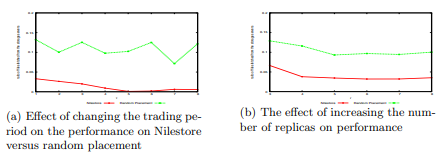
We introduce NileStore, a replica placement algorithm based on an economical model for use in Peer-assisted cloud storage. The algorithm uses storage and bandwidth resources of peers to offload the cloud provider's resources. We formulate the placement problem as a linear task assignment problem where the aim is to minimize time needed for file replicas to reach a certain desired threshold. Using simulation, We reduce the probability of a file being served from the provider's servers by more than 97.5% under realistic network conditions. © 2011 IFIP International Federation for Information