
Insilico Codon Bias Correction for Transgenic Biological Protein Sequences for Vaccine Production
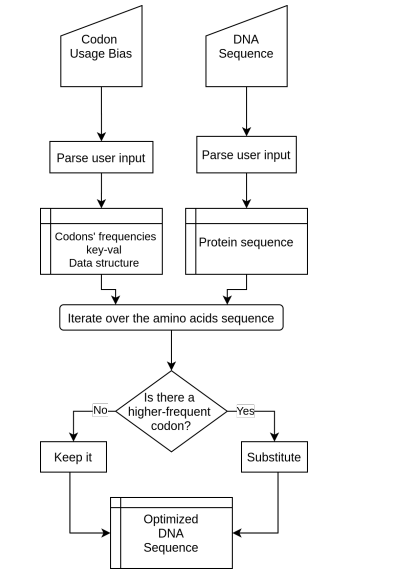
Codon optimization is primarily used in enhancing the levels of protein expression in the host species. Each species has its own codon usage bias, which represents the codons abundance frequency in that species. Using the host usage profile contributes to personalize the synthesis of the DNA vaccines that can achieve highly active vectors the host cells. For optimizing protein expression levels in a particular host, the genetic code sequence needs correction of codon frequency bias to match the expression of host codon landscape rather than the donating organism profile. In this work, we have

MC-GenomeKey: A multicloud system for the detection and annotation of genomic variants

Myocardial segmentation using contour-constrained optical flow tracking
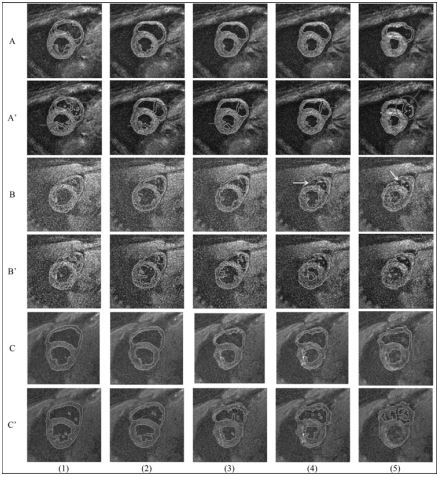
Despite the important role of object tracking using the Optical Flow (OF) in computer graphics applications, it has a limited role in segmenting speckle-free medical images such as magnetic resonance images of the heart. In this work, we propose a novel solution of the OF equation that allows incorporating additional constraints of the shape of the segmented object. We formulate a cost function that include the OF constraint in addition to myocardial contour properties such as smoothness and elasticity. The method is totally different from the common naïve combination of OF estimation within
Myocardium segmentation in strain-encoded (SENC) magnetic resonance images using graph-cuts
In silico design and experimental validation of sirnas targeting conserved regions of multiple hepatitis c virus genotypes
Improved estimation of the cardiac global function using combined long and short axis MRI images of the heart
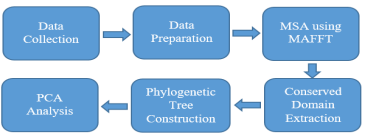
In-Silico Comparative Analysis of Egyptian SARS CoV-2 with Other Populations: A Phylogeny and Mutation Analysis
In the current SARS-CoV2 pandemic, identification and differentiation between SARS-COV2 strains are vital to attain efficient therapeutic targeting, drug discovery and vaccination. In this study, we investigate how the viral genetic code mutated locally and what variations is the Egyptian population most susceptible to in comparison with different strains isolated from Asia, Europe and other countries in Africa. Our aim is to evaluate the significance of these variations and whether they constitute a change on the protein level and identify if any of these variations occurred in the conserved
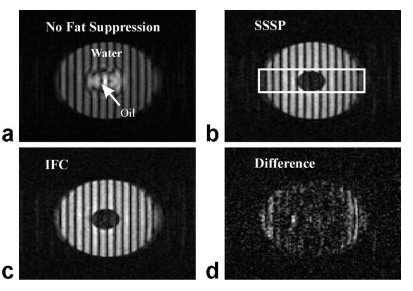
Inherent fat cancellation in complementary spatial modulation of magnetization
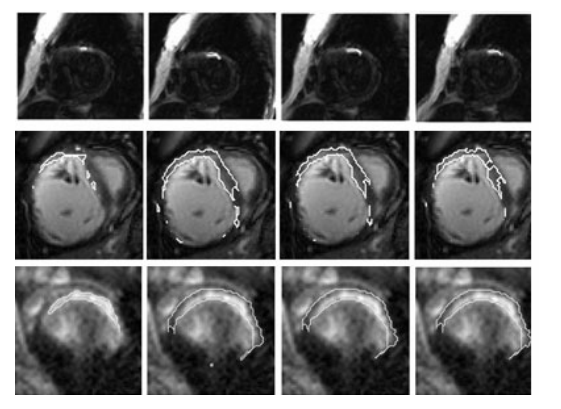
Improved technique to detect the infarction in delayed enhancement image using k-mean method
Cardiac magnetic resonance (CMR) imaging is an important technique for cardiac diagnosis. Measuring the scar in myocardium is important to cardiologists to assess the viability of the heart. Delayed enhancement (DE) images are acquired after about 10 minutes following injecting the patient with contrast agent so the infracted region appears brighter than its surroundings. A common method to segment the infarction from DE images is based on intensity Thresholding. This technique performed poorly for detecting small infarcts in noisy images. In this work we aim to identify the best threshold
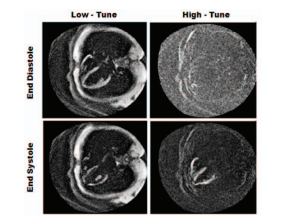
Improved strain measuring using fast strain-encoded cardiac MR
The strain encoding (SENC) technique encodes regional strain of the heart into the acquired MR images and produces two images with two different tunings so that longitudinal strain, on the short-axis view, or circumferential strain on the long-axis view, are measured. Interleaving acquisition is used to shorten the acquisition time of the two tuned images by 50%, but it suffers from errors in the strain calculations due to inter-tunings motion of the heart, which is the motion between two successive acquisitions. In this work, a method is proposed to correct for the inter-tunings motion by